
Q-Cyber Magazine · Incident report
Denmark's CPR breach: 8.8 million records reached through one company's lawful access
Over about ten days in September, unauthorised parties used a private company's lawful access to Denmark's CPR register to reach names, addresses and CPR numbers of about 8.8 million people.
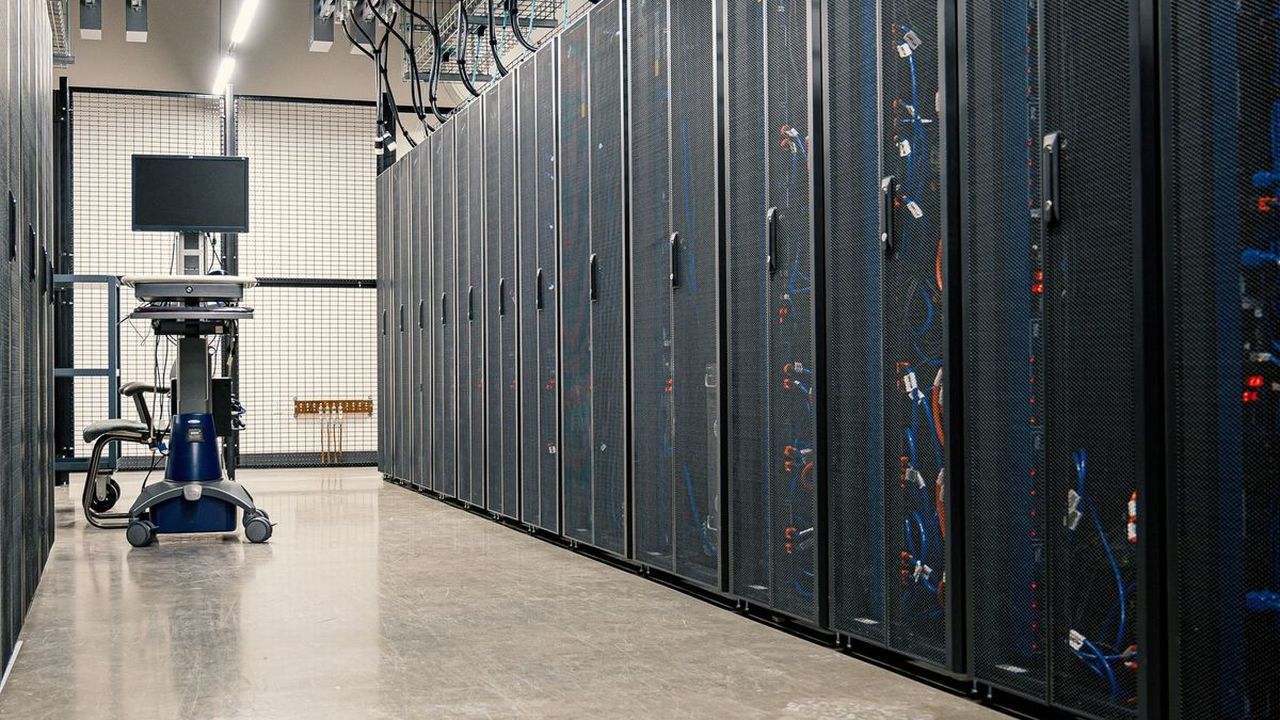
Copenhagen, 23 November 2026. Denmark's Central Person Register (CPR), the national register behind the personal identification number every resident carries, has suffered what the responsible minister called a deeply serious security incident. Unauthorised parties used a private Danish company's lawful search access to reach the names, addresses and CPR numbers of about 8.8 million registered people.
What happened
According to the statement of 5 October from the ministry responsible for digitalisation, the CPR administration became aware on the evening of Friday 2 October that there had been irregular activity in the system during September. Over the following weekend it established that unauthorised parties had obtained names, addresses, CPR numbers and other details of about 8.8 million registered people. The register holds about 11 million entries, because it also covers people who have died or moved abroad.
According to the ministry, the access ran through a private Danish company's lawful access to search the register, within the data that private companies may receive under section 38 of the CPR Act. At a press briefing on 6 October, a ministry official said the activity came to light through an unusually expensive invoice to the company, Ritzau reported. Companies pay for CPR queries.
Who is affected
The ministry's review found that people registered with name and address protection were not included. The register can also hold marital status, family relationships, citizenship and guardianship details; the ministry has not specified which additional fields were reached in each case, The Copenhagen Post reported. At the 6 October briefing, an official said the data was mainly name and address information.
Residents have responded. By 3 November, the number of people with a credit warning in the CPR had risen by 1.1 million since the incident, to almost 1.4 million, according to DR. A credit warning makes it harder to take out loans in a person's name.
What is confirmed, and what is not
Confirmed by the authorities: the scale of about 8.8 million records; the September window; the route through one company's lawful access; the closure of that access; the police report; and the formal inquiry by the Danish Data Protection Agency, which received the breach notification on 4 October and has sent hearing letters to the CPR administration and a company connected to the case.
Not confirmed: who is behind the incident and what the data is for. On 6 October the National Unit for Special Crime said it was too early to say who was responsible or what method was used, adding that such cases are often cross-border. The director of the Danish Agency for Civil Protection said the authorities did not know what the data would be used for, but that digital fraud was an obvious concern. An anonymous person later told the newspaper Politiken that they were behind the incident and described how they logged in; that claim has not been officially confirmed.
The official response
The minister, Christina Egelund, briefed parliamentary committees and ordered a thorough security review of the CPR system, with no fixed end date, TV 2 reported. She told Ritzau that the security measures around the company's access "have not been good enough", and that warnings should have triggered sooner, according to The Copenhagen Post. The ministry says measures have already been introduced to prevent similar incidents, and has urged residents to stay alert and consult the national guidance site sikkerdigital.dk.
The Danish Agency for Civil Protection also said that a CPR number on its own can no longer be relied on to identify a person, and that services that identify people by CPR number alone must find other means. The minister has said it is too early to decide whether residents will need new CPR numbers, Ritzau reported.
What it means
- Trusted access is part of the attack surface. The route here was an account with permission to search. Every organisation that grants partners, suppliers or customers access to a register or an API should know who holds that access, what it is for, and whether it is still needed.
- Watch volume, not only permissions. Each query was within the company's rights; the pattern was not, and it surfaced through billing after about ten days. Rate limits, per-client volume thresholds and alerts on unusual retrieval belong next to access control. Knowlcom's identity and zero-trust architecture work treats every request as one to verify and log.
- Identifiers that cannot be changed are long-lived secrets. A national identification number stays with a person for life. That is the same reasoning behind prioritising post-quantum migration by data lifetime: information that must stay protected for decades goes first. This incident did not involve broken encryption, but the planning rule is shared; see PQC migration consulting and harvest now, decrypt later.
- Knowing someone's details is not proof of identity. Service desks, banks and public services that verify callers by name, address and number alone should move to stronger authentication. The enterprise identity and least privilege article sets out the controls.
The investigation is continuing. This article will be updated if the authorities publish further findings.
Sources
- Forsknings-, Uddannelses- og Digitaliseringsministeriet, Omfattende uautoriseret adgang til borgeres CPR-oplysninger (5 October 2026)
- CPR, Omfattende uautoriseret adgang til borgeres CPR-oplysninger (5 October 2026)
- Datatilsynet, Datatilsynet indleder formel undersøgelse af CPR-sagen (23 October 2026)
- The Copenhagen Post (Ritzau), Danish minister says security was inadequate after access to 8.8 million personal records (5 October 2026)
- The Copenhagen Post, CPR data breach exposes personal details of 8.8 million people in Denmark (5 October 2026)
- TechCrunch, Hackers steal 8 million citizens' records from Danish government database (5 October 2026)
- Nyheder.dk (Ritzau), CPR-læk: Minister erkender svigt i CPR-sikkerheden (5 October 2026)
- Nyheder.dk (Ritzau), CPR-sagen: Det er for tidligt at sige (6 October 2026)
- TV 2, live coverage of the CPR incident (5 to 23 October 2026)
- DR, 1,1 millioner har søgt om kreditadvarsel efter CPR-læk (3 November 2026)
- CSIS Security Group, Denmark's CPR breach: trusted access as the attack path
Related articles

Government
Harvest now, decrypt later: Why long-lived government records cannot wait
Adversaries can record ciphertext today and decrypt it once a cryptanalytically relevant quantum computer exists; government records with long confidentiality lives should therefore move first to post-quantum key establishment.
5 November 2026 · 4 min read

Enterprise
Identity and least privilege: The first pillar of enterprise zero trust
NIST and CISA place identity at the centre of zero trust: no implicit trust from location, and a per-request authorisation that should be no broader than the task requires.
19 June 2026 · 3 min read

Government
India's DPDP Act and Rules: A practical map for public authorities
The DPDP Act, 2023 and the DPDP Rules, 2025 now give Indian public authorities a phased, principles-based map for consent, safeguards, breach notice and data-principal rights.
6 November 2026 · 3 min read